


SPONSORED CONTENT | Written & Photographed by Destination Salem
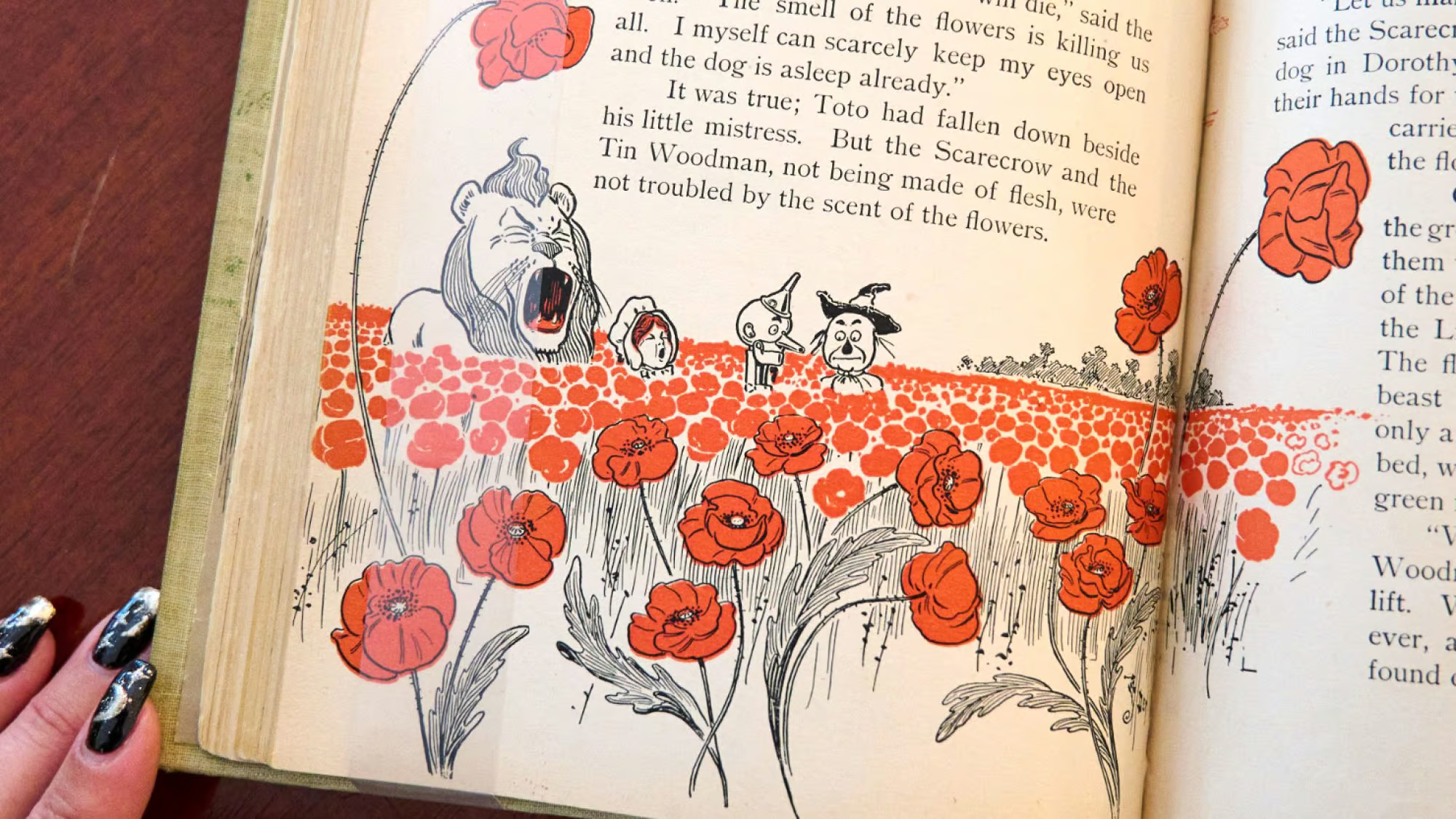
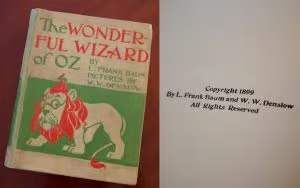
If you’re planning a trip to Salem, chances are you’re interested in its long and complex relationship with the figure of the witch. From 17th-century trials to 21st-century pop culture, the story is layered—and no stop tells it quite like the Salem Witch Museum. While most visitors come expecting court documents, historical artifacts, and darkly fascinating narratives from 1692, many are surprised to discover something unexpected in the “Witches: Evolving Perceptions” exhibit: a rare, first-edition copy of “The Wonderful Wizard of Oz,” published in 1900.
So why is this children’s book on display in a museum about witch trials?
L. Frank Baum’s story played a major role in transforming how witches were imagined in American popular culture. Inside this first edition — featuring vivid illustrations by W.W. Denslow — you’ll meet both the Wicked Witch of the West and two of America’s earliest literary good witches: Glinda and the Good Witch of the North. These characters have been described as America’s first notable good witches, offering a new interpretation of this figure within popular culture.
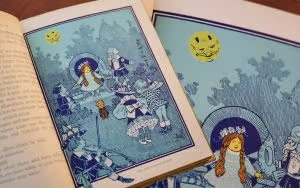
The museum’s copy of the book is a true first printing, complete with original misprints and flawed image plates that collectors and book lovers will immediately recognize. It’s the kind of object that invites you to lean in for a closer look—at the aged green cloth binding, the hand-colored illustrations, and the little quirks that mark it as a survivor of more than a century of history. It’s one thing to know The Wonderful Wizard of Oz as a story; it’s another to stand inches away from the very pages where that story began.
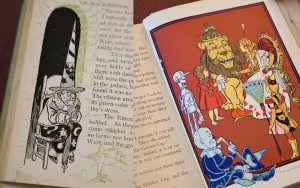
Positioned nearby is a signed photograph of Margaret Hamilton in her iconic role as the Wicked Witch of the West from the 1939 MGM film. When the studio introduced bright green skin using Technicolor, they redefined the witch’s image once again—this time for the silver screen. Seeing the first edition alongside this photo offers a rare moment where book history and film history intersect in one small corner of the museum.
There’s also a deeper layer for visitors curious about how ideas travel through generations. Baum was married to Maud Gage Baum, the daughter of Matilda Joslyn Gage. This early women’s rights advocate wrote extensively about religion, politics, and the persecution of women throughout history, including those accused of witchcraft. While we can’t say for certain how much Gage influenced her son-in-law’s writing, her ideas were part of the world he lived in. For visitors interested in the relationship between literature, gender, and power, this connection adds even more meaning to the book’s presence in the museum.
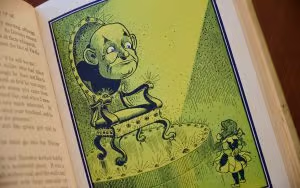
Salem is known for its haunting history, but it’s also a city where imagination, reinvention, and reinterpretation are constant themes. This book reflects that ongoing evolution. It’s not just a childhood classic — it’s part of a larger cultural shift in how witches were understood, not as villains, but as complex characters with stories of their own.
If you’re making your way through Salem’s many museums, shops, and historic sites, take the time to visit the Salem Witch Museum and seek out this hidden gem in the Witches: Evolving Perceptions exhibit. Whether you’re a fan of literature, film, history, or just the magic of storytelling, this first edition of The Wonderful Wizard of Oz is a small but meaningful stop on your journey through Salem’s past—and present.