


Sponsored Content | Photographed by Jess Shada, Destination Salem
There are plenty of ways to learn about the Salem witch trials, but there is something unique about standing in front of an object that can be traced directly to the people and events of 1692.
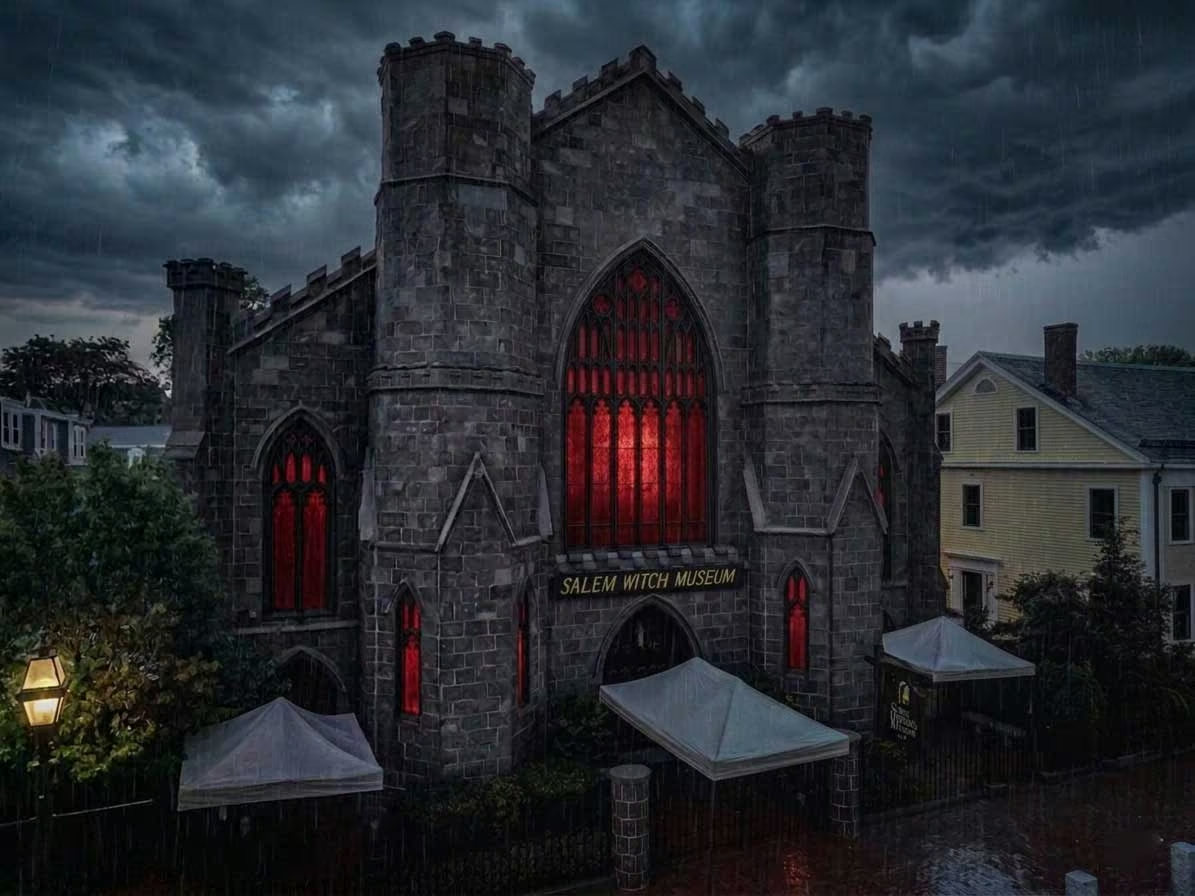
At the Salem Witch Museum, visitors can now get an even closer look at this history through new additions to Witches: Evolving Perceptions, the museum’s second exhibit. Seven artifacts were recently added as the museum continues to build its permanent collection, ranging from rare historic texts to pieces of 20th-century witch pop culture.
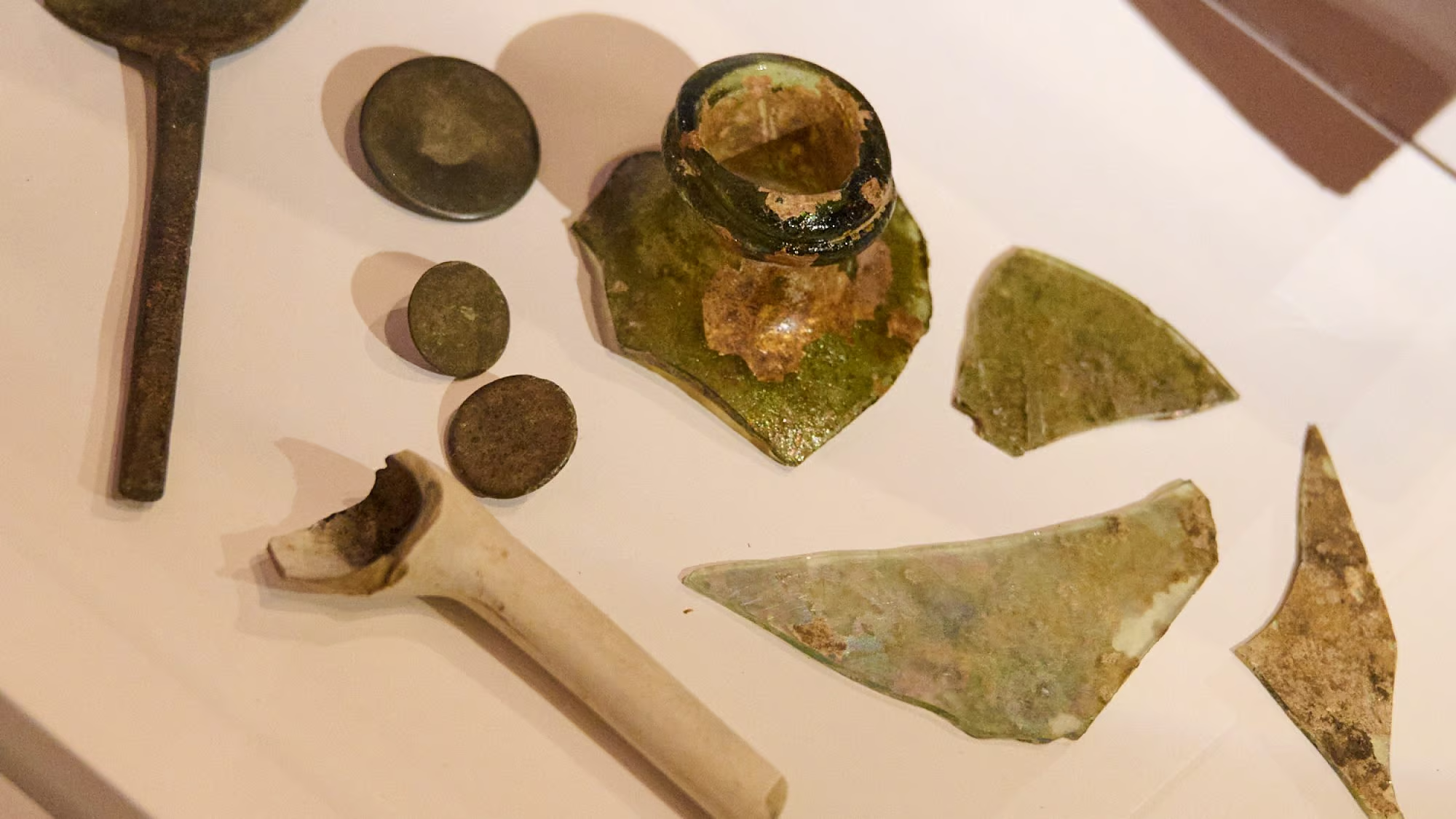
Among the most remarkable objects are artifacts recovered from the Ipswich property once owned by Elizabeth and James How. Elizabeth How was one of the 19 innocent people hanged during the Salem witch trials, executed on July 19, 1692 alongside Sarah Good, Rebecca Nurse, Susannah Martin, and Sarah Wildes. Objects with such a close connection to a victim of the trials are exceedingly rare; only a handful of personal items associated with people involved in the witch hunt have survived.
In 2005, Tammy Goss was building a new home on Linebrook Road in Ipswich when pieces of redware pottery were uncovered several feet below ground. Additional digging revealed more artifacts and eventually the base of a chimney. Goss spent years researching the property, and an archaeological dig funded by the Ipswich Historical Commission helped corroborate that the site was associated with the How family’s 17th-century homestead.
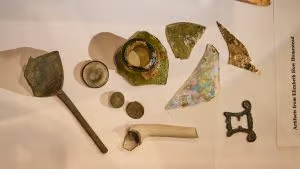
Today, visitors to the Salem Witch Museum can see a clay pipe, pewter spoon, glass bottleneck, buttons, buckle, and shards of glass from the property. The Goss family donated the collection in Tammy’s memory following her death.
The exhibit also offers another kind of direct connection to 1692: a book that belonged to Judge Samuel Sewall. The 1650 A Large and Complete Concordance to the Bible contains Sewall’s annotations and his signature, dated April 30, 1717. Sewall served on the Court of Oyer and Terminer during the Salem witch trials, but his story took an unusual turn afterward. In 1697, he became the only magistrate involved in the trials to publicly apologize for his actions.
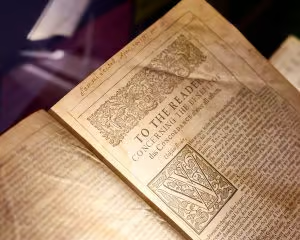
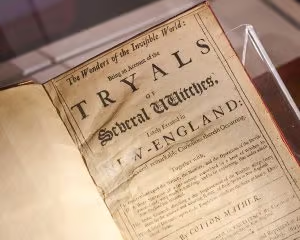
Nearby is a very different perspective on the trials: a 1693 edition of Reverend Cotton Mather’s The Wonders of the Invisible World. Published contemporaneously, the book presented a court-sanctioned account that defended the trials as a necessary response to the threat of witchcraft.
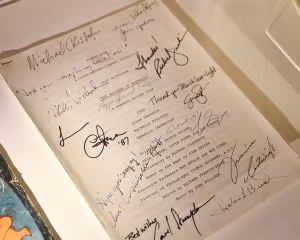
The Witches: Evolving Perceptions exhibit does not end in 1692. It explores how the meaning and image of the witch have continued to change over centuries, and some of its newest objects make that evolution particularly fun to see. A 1923 LIFE magazine depicts a glamorous young witch riding a vacuum cleaner. There’s also a 1960 Wendy the Good Little Witch comic book, a cast-signed 1987 production packet from The Witches of Eastwick, and even a 2008 Wicked Witch of the West Barbie.
Together, the additions span centuries of history, from objects once buried at a 17th-century homestead to the witches of Hollywood and popular culture.
The history of the Salem witch trials isn’t frozen in time. New research continues to uncover details about the people and places connected to 1692, and the Salem Witch Museum is continually adding objects that help tell those stories. As the collection grows, even longtime Salem visitors may find something they have never seen before.